2026-03-18
A single box of 100 256GB DDR5 server memory modules is priced at nearly 6 million RMB—a value comparable to real estate in a major city. This is not a prediction of the future, but a true snapshot of the storage market in early 2026.
With the explosive growth in demand for AI computing power, the global storage chip market is experiencing an unprecedented supercycle. A single AI server requires 8 to 10 times more memory than a traditional server, and this massive demand has completely upended the supply landscape.
In pursuit of higher profits, global memory giants such as Samsung, SK Hynix, and Micron have shifted a significant portion of their high-end production capacity to HBM and server DDR5, directly leading to severe constraints on production capacity for consumer-grade and general-purpose server memory, causing prices to spiral out of control.
Market research firm TrendForce notes that contract prices for server DDR5 surged far beyond expectations in the fourth quarter of 2025 and are projected to continue rising throughout 2026. Amid this trend, enterprise users face a direct and costly dilemma: when expanding server memory, should they purchase a single 128GB module at a premium price, or opt for two 64GB modules at a relatively “affordable” price?
1.Price Storm: When Memory Modules Become “Hard Currency”
It is no exaggeration to describe the memory market in 2026 as “crazy.” A report by market research firm Counterpoint shows that market conditions have surpassed the historical highs of 2018, with suppliers’ bargaining power reaching an all-time high.
The consumer market has already fallen first. Data shows that the price of a mainstream 2x32GB DDR5-5600 desktop memory kit has skyrocketed from several hundred euros to nearly 700 euros within a few months. An even more extreme example is the 2x16GB DDR5-6000 memory, which has seen a price increase of over 427%.
The enterprise server market is at the epicenter of the storm. According to reports from Investment Circle and the Yangtze Evening News, the price of a single 256GB DDR5 server memory module from SK Hynix and Samsung has surpassed 40,000 yuan, with some models reaching as high as 49,999 yuan.
If calculated based on a box of 100 modules, the total price approaches 5 million yuan—a value that exceeds that of some properties in Shanghai. This is not merely a price hike, but a revaluation driven by a severe imbalance between supply and demand.
Against the backdrop of the "skyrocketing" memory prices, the traditional logic for expansion decisions must be rewritten. We take a common server memory expansion,demand - adding 256GB of memory - as an example for an intuitive cost comparison
Expansion Solution | Configuration Description | Estimated Cost (Current High-Price Market) | Core Disadvantage Analysis |
Solution A: Purchase Large-Capacity Modules | Directly buy 2 x 128GB DDR5 server memory modules | Approx. 80,000 - 100,000 RMB | 1. Extreme Premium: 128GB modules have a far higher unit capacity cost than 64GB ones due to scarce production capacity, with a huge "capacity tax". 2. Resource Lock-in: Two precious motherboard DIMM slots are exhausted at once, leaving zero flexibility for future upgrades. 3. Single Point of Failure: A single module failure affects half the capacity, leading to high redundancy costs. |
Solution B: Combine Standard Modules | Buy 4 x 64GB DDR5 server memory modules | Approx. 15,000 - 25,000 RMB | 1. Slot Occupation: Inserting all modules into the motherboard will take up 4 DIMM slots, which may affect other memory configurations or future upgrade space. 2. Performance Bottleneck: In some applications requiring extremely high memory bandwidth, configuration management of multiple modules may cause slight latency. |
Obviously, Solution B has an overwhelming cost advantage, possibly only 1/4 of Solution A. But its consumption of motherboard slots is a fatal flaw. Is there no solution that can simultaneously balance the cost of Solution B and the slot savings of Solution A?3.The Game-Changer: Restructuring Cost and Flexibility with CXL Expansion Cards
The answer is to leverage CXL (Compute Express Link) technology. This is not just a change in connection method, but an upgrade in server architecture thinking. By expanding memory through the PCIe bus, the CXL protocol ensures extremely low access latency, allowing expanded memory to be efficiently used by the processor just like local memory.
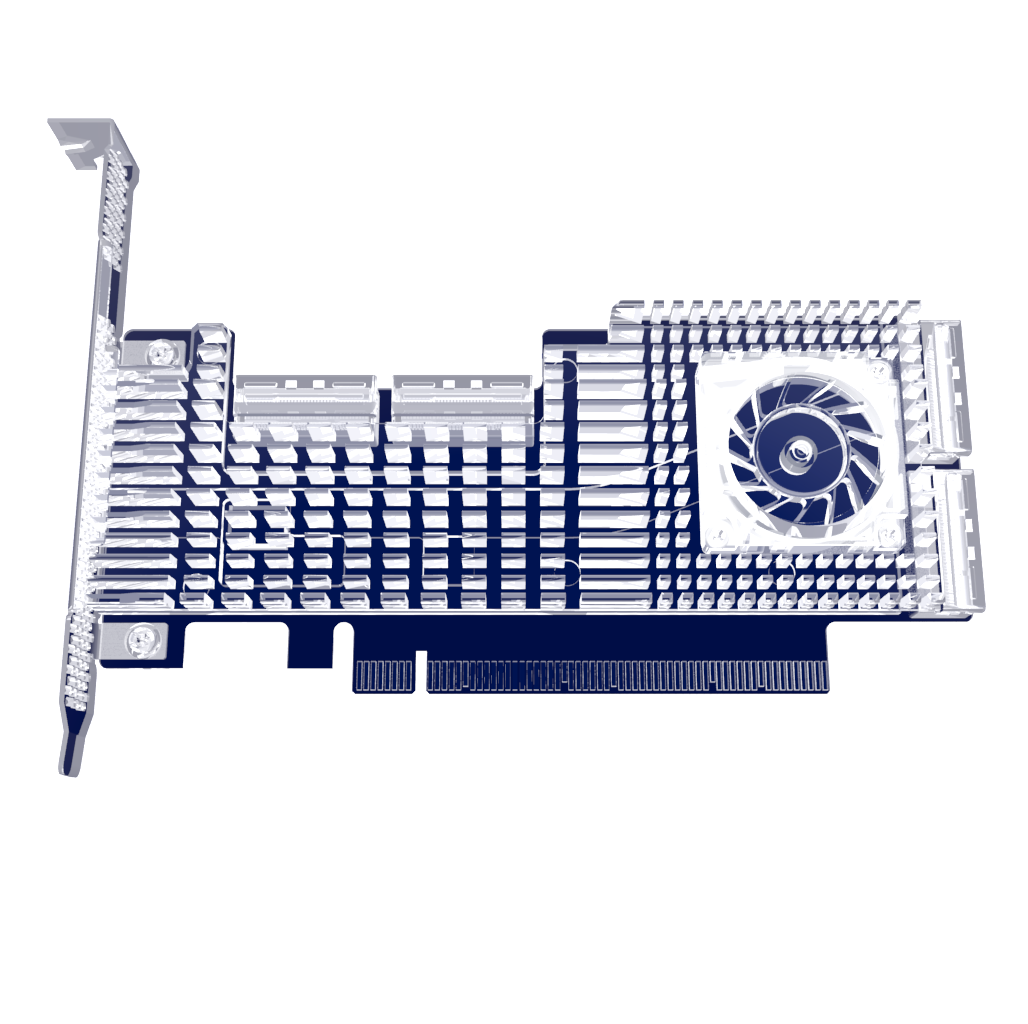
Our LRDR9G91-2I PCIe 5.0 x8 dual-slot DDR5 memory expansion card is born exactly for this purpose.
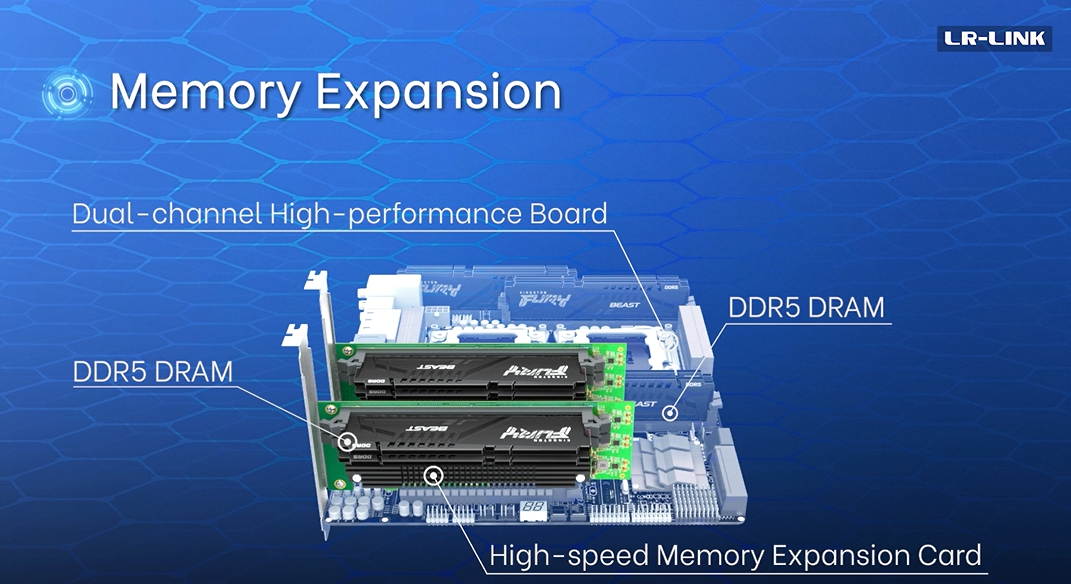
It provides a "Solution C" that breaks free from the "either-or" dilemma:Purchase 1 LRDR9G91-2I expansion card + 4 x 64GB DDR5 memory modules. The expansion card occupies only 1 PCIe x16 slot, freeing up all DIMM slot resources on the motherboard.
The revolutionary advantages of this solution are as follows:
1. Ultimate Cost Savings: Total Cost = Expansion Card + 4x64GB Memory. By avoiding overpriced 128GB memory modules, the overall procurement budget can be immediately cut by more than 60%.
2. Investment Protection and Flexibility: All motherboard DIMM slots remain free. When memory prices fall or technology is updated in the future, you can upgrade without any burden, protecting the long-term value of the server motherboard.
3. Supply Chain Security: The production capacity of 64GB memory modules is relatively more stable, and the risk of supply shortage is far lower than that of the "scarce" 128GB/256GB products, ensuring project delivery cycles.
4. Performance and Reliability: Based on the high-bandwidth channel of PCIe 5.0 x8 and CXL 2.0 specification, it ensures that the expanded memory performance meets the requirements of harsh applications. The dual-slot design also facilitates the construction of memory redundancy.
Today, as memory costs account for an increasing proportion of the total server cost, CXL expansion cards such as the LRDR9G91-2I have become a "pressure relief valve" for core businesses.
For AI Training and Inference: Massive memory is required for the parameters and intermediate states of large models. By stacking multiple expansion cards, the single-machine memory capacity can be easily increased to 1TB or even higher, avoiding GPU idleness caused by insufficient memory and greatly improving the utilization rate of computing resources.
For High-Density Virtualization and Cloud Hosts: Service providers can flexibly and cost-effectively allocate cloud hosts with different memory specifications by standardizing the configuration of servers with "motherboard base memory + CXL expanded memory", quickly responding to market demand while building a cost moat.
For In-Memory Databases and Real-Time Analysis: The performance of applications such as SAP HANA and Redis is directly proportional to memory capacity. Adopting the expansion solution can break through the memory capacity bottleneck at a lower cost and process larger-scale datasets.
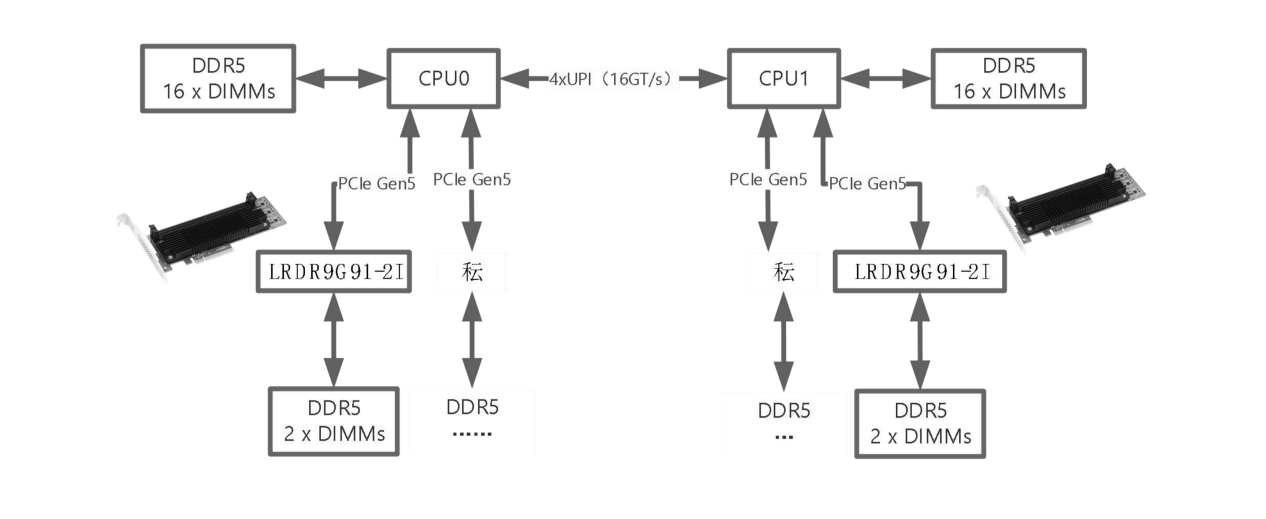
Faced with continuously rising memory prices and an uncertain supply cycle, waiting and watching mean project delays and opportunity costs.
We recommend taking the following steps to build a cost-resilient IT infrastructure:
1. Re-evaluate the Architecture: Review existing and planned servers to see if sufficient PCIe slots are reserved to support CXL expansion cards. Incorporate CXL expansion capability into the mandatory specifications of future servers.
2. Launch Proof of Concept: Deploy the LRDR9G91-2I in a test or development environment to verify its compatibility and performance with your operating systems and application software.
3. Formulate a Hybrid Procurement Strategy: Divide the memory budget into two parts: one part for purchasing standard-capacity 64GB memory modules at a competitive price; the other part for investing in CXL expansion card hardware. This is far safer than betting the entire budget on highly volatile large-capacity memory modules.
When procurement managers no longer feel anxious about memory orders "worth a house", when operation and maintenance engineers can easily add several terabytes of memory to servers without replacing the entire machine, when enterprises' AI projects advance at an accelerated pace due to controllable costs - this is where the value of technology lies.
The storm in the memory market may still continue, but smart enterprises have already found their navigator. The LRDR9G91-2I PCIe 5.0 CXL memory expansion card is not just a piece of hardware, but a strategic choice to ensure business continuity and optimize long-term TCO (Total Cost of Ownership) in an uncertain environment.
Choose flexible expansion over expensive replacement; choose architectural flexibility over resource lock-in. This is the most cost-effective answer in the era of skyrocketing DDR5 prices.